
The accelerated digitalization and growing utilization of IoT and AI technologies in recent years has made data centers an essential part of our lives. As the AI infrastructure and data center industries adopt more advanced chips with higher speed and increased data processing capacity, how to manage the heat generated by these systems has become an urgent challenge. Innovation in cooling technology is critical to ensure stable operation and sustainability in an evolving AI-assisted society.
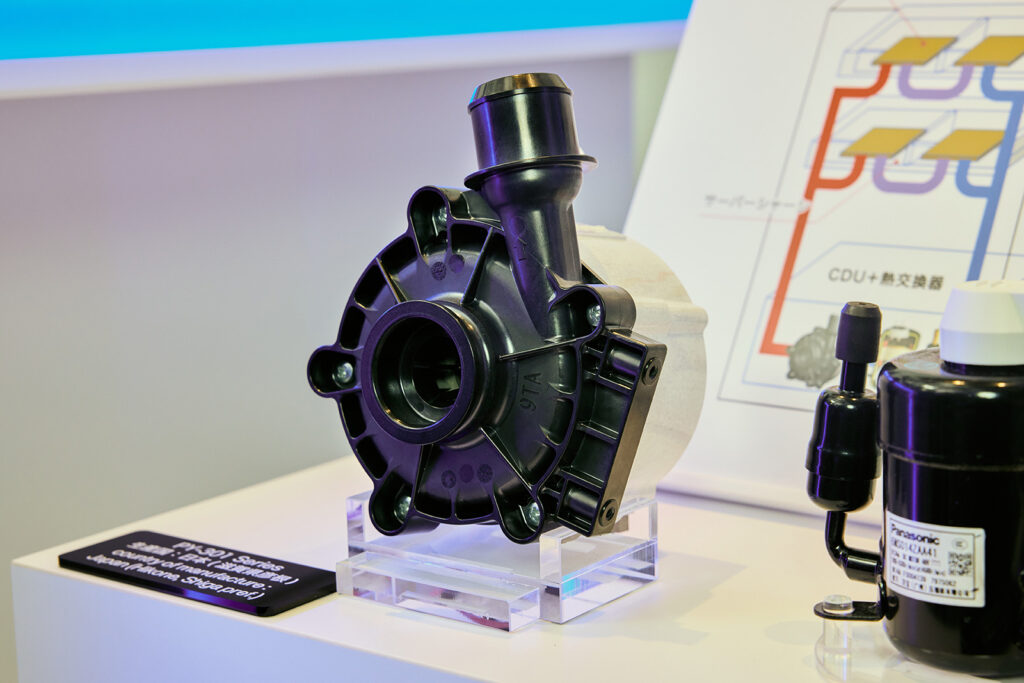
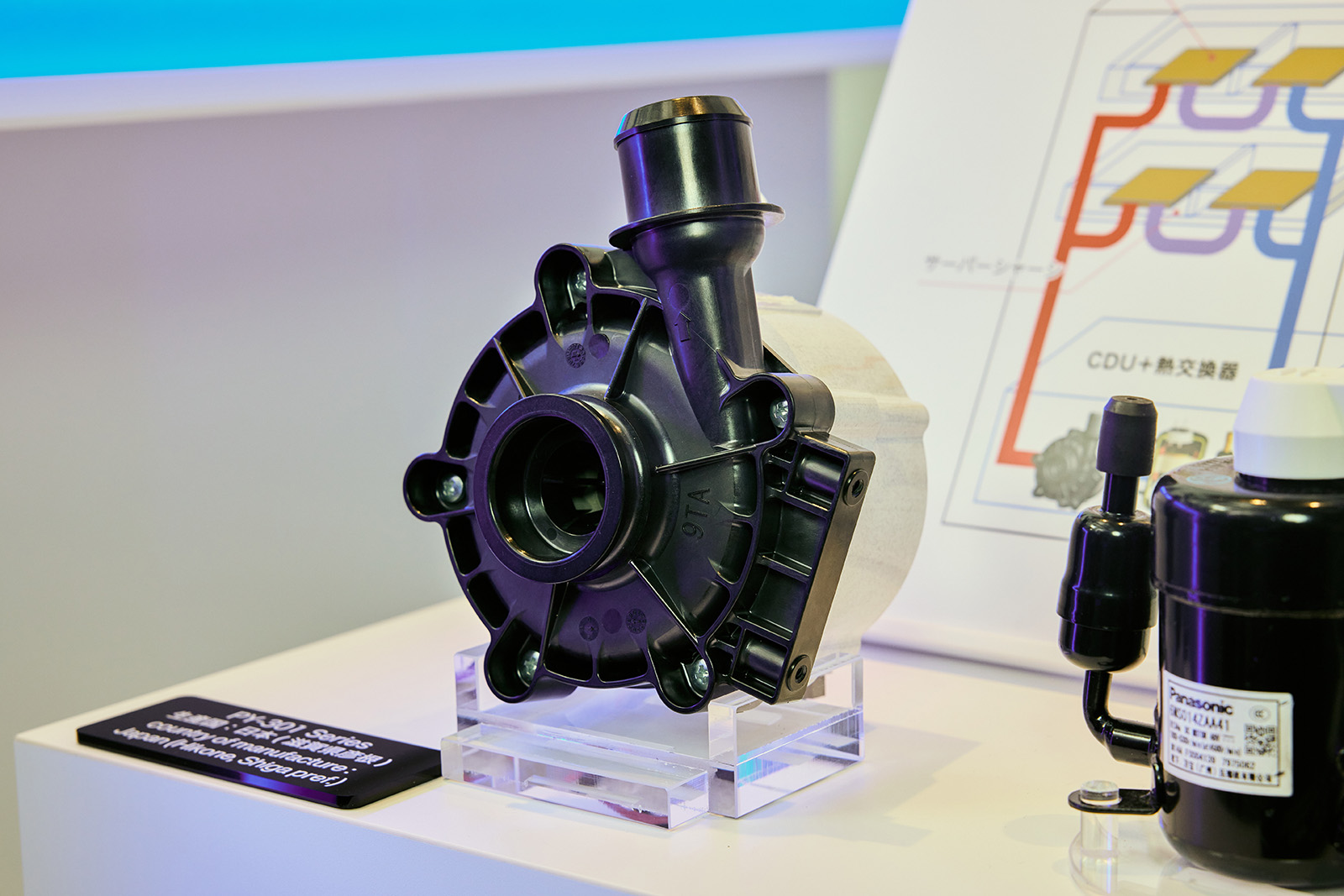
Panasonic celebrated its 70th anniversary in pump business in 2025. Leveraging expertise gained from its pump business, Panasonic developed a new liquid cooling pump specifically designed for cooling servers in data centers. The pumps can be configured into a Coolant Distribution Unit (CDU), a core component for server cooling, to circulate liquid efficiently.
This article introduces Panasonic’s ongoing efforts to realize a sustainable digital society through developing compact, high-efficiency, and long-life pumps that help make operations for AI infrastructure more reliable and energy efficient.

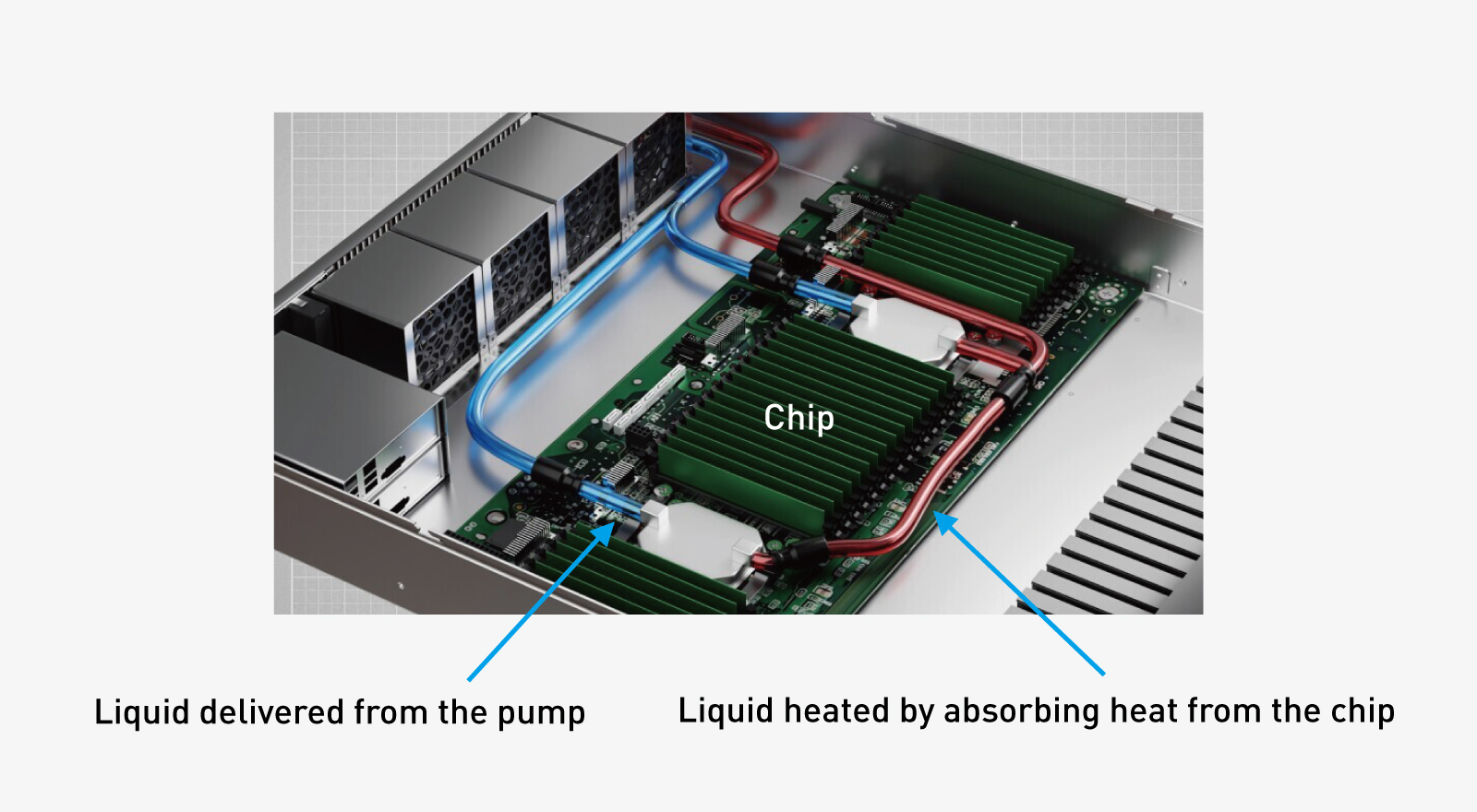
To deal with the excess heat that GPUs and AI accelerators generate inside servers, there is a growing need for more effective cooling solutions. Liquid cooling systems are gaining popularity, because liquids conduct heat better than air, which has traditionally been used in systems like fans and air conditioners.
These liquid cooling systems rely on liquid cooling pumps, which send liquid through servers to absorb heat. The liquid is then cooled down in the CDUs outside the servers before being recirculated. The pumps housed inside the CDUs efficiently dissipate heat and ensure continuous circulation. Demand for these pumps has been greatly expanding, as they enhance the overall reliability and energy efficiency of server systems.
Panasonic was ready to meet this demand. The company has a successful history with 70 years in the pump business, starting in 1955 with home pumps (well pumps) for household water. Since the 1980s, Panasonic’s technology has been widely used for built-in pumps in residential water heating, space heating, and bathroom systems. Its pump technology subsequently expanded into applications such as heat exchangers and waste heat recovery systems. Cumulative pump sales surpassed 53 million units in 2024, and Panasonic’s pump business holds a dominant share in Japan’s water heater market. This strong position has been built on the early adoption of DC (direct current) motors that improve energy efficiency and on compact, lightweight designs—features that are highly valued by customers.
Leveraging this technology and its successful track record, Panasonic entered a new market in 2021. “In addition to our core heating industry market, we entered the data center market. This was a major challenge for us,” says Koji Nakamura, Director of the Device Products Business Unit, Beauty & Personal Care Division.
The CDU comes in two types: the In-Rack type, which provides cooling for an individual server rack, and the In-Row type, which cools multiple servers. Panasonic’s liquid cooling pumps are compact enough to be installed in In-Rack CDUs. In this configuration, three pump units can be housed within the limited 4U (178 mm) internal space of an In-Rack CDU. Two pumps operate continuously, while a third pump provides redundancy to prevent cooling failures. This high level of redundancy is essential for data protection in case of emergency situations.